
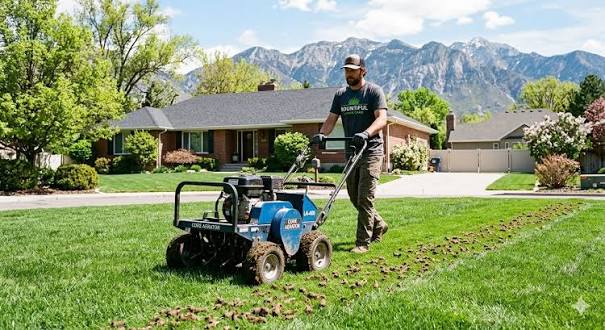
Your lawn undergoes a lot of stress through extreme summer heat, cold winter conditions, and continuous foot traffic. As time goes by, the soil underneath your grass gets compacted, preventing roots from breathing and preventing water, air, and nutrients from passing through. With the help of a lawn aeration service, this compacted soil is loosened, making your grass become lush green.
This is what Sunlight Water & Us has been providing to people residing in Pennsylvania and New Jersey through its decades of experience with grass aeration services.
How to Tell if Your Lawn Is in Need of Aeration
Lawn roots don’t make clear signs of stress like leaves would from a tree. Small, easily overlooked symptoms include thinning grass patches, puddles of water on top of the ground, or soil that becomes very hard to the touch when probing with a screwdriver.
Compaction occurs quickly with heavy clay soil, constant parking of vehicles,s or areas that see lots of foot traffic next to patios or driveways. If one or more of these ring true, chances are that you need a lawn aeration service.
Symptoms include:
- Thinning or weak grass patches
- Puddles of water instead of water absorbing into the soil
- Soil that won’t give way with a screwdriver or shovel
- Heavy clay soil
- Constant foot or vehicle traffic
Once compaction has been diagnosed, the solution is actually pretty simple. Core lawn aeration involves the use of a machine that digs cores of soil and thatch out of the ground, as opposed to machines that only poke holes into the ground.
This is where the importance of using professional lawn aeration services becomes apparent. Trained technicians understand at what depth to dig the cores, the distance to leave between them, and how not to stress the lawn during its growth period.
What Goes On During Lawn Aeration?
Firstly, the technician will tour the lawn to determine its soil type, kind of grass, and trouble spots such as slopes or shade zones. Secondly, the technician will use a core aerator to run over the entire lawn in overlapping patterns to cover the whole area evenly.
As a result, small soil plugs will remain on top of the lawn and decay naturally within several weeks while contributing their own nutrients to the lawn. It is common for clients to order both services, as overseeding is much easier when there are fresh holes in the soil.
There are many more benefits of lawn aeration other than loose soil. In fact, once the roots get access to water and fertilizers, they grow deeper and denser and therefore help the grass cope with such problems as high temperatures, drought, and general wear much more effectively.
- Denser and deeper root system
- Better water, air, and fertilizer uptake
- Lower chances of thatch formation and soil compaction
- Higher heat, drought, and disease resistance
- Greener and denser lawn in a short time
In most cases, getting a lawn core aeration service once a year is sufficient, but lawns that have dense clay soils or frequent traffic may require it more often.
When Should You Aerate Your Lawn?
Timing is just as important as the process of lawn aeration itself. Get the timing wrong, and your lawn will struggle to bounce back; get the timing right, and you’ll have a rejuvenated lawn in weeks. For cool-season grass, such as Kentucky bluegrass and ryegrass, the ideal times to aerate your lawn are either late in the fall or early spring, just before the grass begins its period of most vigorous growth.
For warm-season grasses, such as Bermuda and Zoysia, it is better to aerate during late spring, after the growing season has started. If your lawn has been recently seeded, however, you should wait approximately six months before attempting to aerate it.
It is easy to hire equipment for a day to try a DIY project, but it’s always easier if you hire a professional lawn aeration service.
There are a few easy aftercare tips that will allow your lawn to benefit from every hole created by the process:
- Water the lawn thoroughly one or two days after the aeration process
- Do not mow the lawn until at least two days have passed
- Fertilize or plant grass seeds when the soil is exposed
- Leave the plugs on the lawn where they are
- Do not walk on the lawn for at least a week
Give Your Lawn the New Beginning It Needs
A compacted lawn will not correct itself, but it only takes one seasonal visit to get it back into shape faster than many homeowners realize. From standing water to brown spots or grass that won’t grow thicker, aeration gets to the core of the problem rather than just covering up the symptoms.
For decades, Sunlight Water & Us has provided lawn help to homeowners throughout the Lehigh Valley area and even neighboring areas of New Jersey without using any high-pressure sales methods or contract commitments. The experts at Sunlight Water & Us understand the regional soil and grass varieties better than any national company can.
Looking to make some room for your grass to breathe? Ask about getting an estimate now and see how a well-timed visit can improve your lawn.
FAQs:
What is the price of a lawn aeration service?
The price depends on the size of your lawn, its soil condition, and the inclusion of overseeding in the process. Larger areas of compacted and clay-like soil will naturally cost more due to longer service time and effort needed to perform the task correctly.
Can I do a lawn aeration myself or should I hire professionals?
It is possible to rent a machine for the purpose; however, making the correct holes in terms of depth, distance, and timing requires more experience than expected. Otherwise, you may even harm the lawn and not give it the chance to grow healthier.
When will I see results from the lawn aeration?
Usually, the visible thickening and greening of the grass happens within two to four weeks after aeration, especially in combination with overseeding or fertilizing immediately after it. The complete growth of the roots usually takes an entire season.
Is aeration required in case of a new seeding on the lawn?
Not necessarily; a newly seeded lawn must grow roots in order to be able to withstand this activity. Approximately six months after planting, grass will have grown sufficiently strong to withstand the activity of aeration, which may cause damage by uprooting young plants.
Can aeration solve any problem associated with pests or lawn diseases?
To some extent, it can; compacted soil leads to the accumulation of moisture, which in turn causes the weakening of the grass. This creates favorable conditions for the development of pests as well as fungal diseases.
