It takes proper spotted lanternfly management to identify the issue early enough, remove the eggs before spring, and use effective treatment measures at the right time. This species is an invasive one that spreads quickly within the Northeast region, harming plants, outdoor gardens, and trees. Property owners who understand proven spotted lanternfly control methods protect their landscape long before an infestation gets out of hand.
At Sunlight Water & Us have been helping many people in the Lehigh Valley and New Jersey areas prevent damage caused by these pests to their plants for years now. Get in touch with us today to learn more about our reliable spotted lanternfly treatment programs.
What Are the Indicators That There Is a Spotted Lanternfly Infestation?
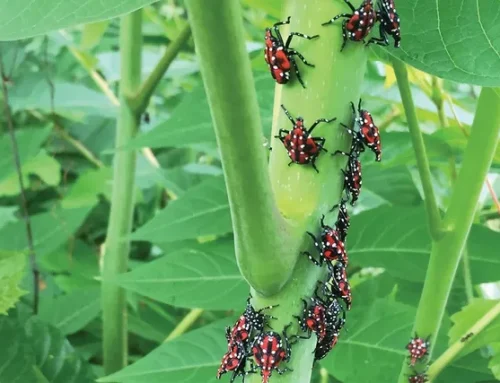
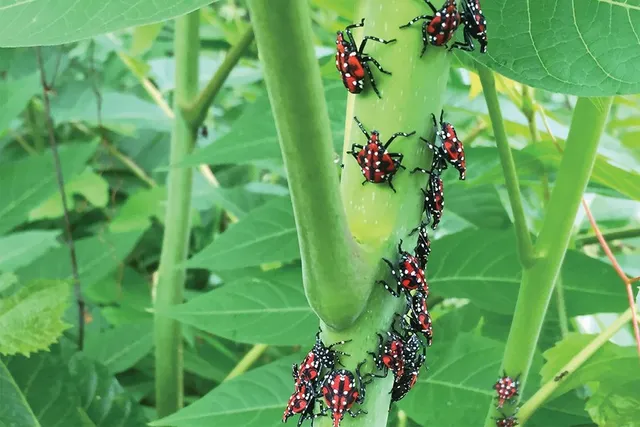
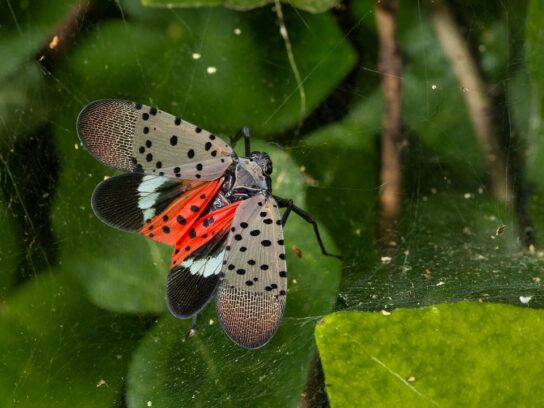
Tree-of-heaven, grapevines, and maples are some of the trees that attract the spotted lanternflies. By late summer, you will find large aggregations of these pests in clusters.
- Coating of sticky, sap-like honeydew on leaves, bark, or patio furniture.
- Growth of sooty black mold on honeydew-coated surfaces.
- Presence of gray or brown egg masses attached to tree trunks and hard surfaces.
- Aggregations of nymphs and adults on tree-of-heaven and grapevines.
- Weeping wounds or sap flowing from tree bark.
Reports of spotted lanternfly in NJ are rising steadily in Warren, Hunterdon, Somerset, and Morris counties, as they are doing so in Pennsylvania’s Lehigh Valley.
Spotted Lanternfly Control: Methods That Work Best for Homeowners
Following confirmation of an infestation, it is typically effective for homeowners to complement their efforts with professional spotted lanternfly treatment because both treatments approach the pest through different routes.
Spotted lanternfly control methods include mechanical treatment, placement of sticky bands, and application of insecticides that are timed according to the life cycle of the pest.
- Egg mass scraping prior to the hatching of nymphs in spring.
- Placing sticky bands on tree trunks to capture climbing nymphs.
- Using circle traps as an alternative to sticky bands when there is wildlife.
- Insecticide application during periods of maximum nymph and adult activity.
- Removal of tree-of-heaven, which serves as a host for the pests.
Prevention Methods to Avoid Bringing the Spotted Lanternflies Back to Your Property
Long-term spotted lanternfly prevention requires constant surveillance rather than a one-time solution.
Regular control of the spotted lanternflies throughout spring and summer will prevent future generations from settling in your yard.
- Check trees, firewood, and outdoor furniture for eggs during autumn and winter.
- Arrange seasonal pest checkups with a lawn and tree specialist.
- Clear garden bed areas and tree lines of young tree-of-heavens.
- Notify local extension offices of extensive infestations.
- Ensure the good health of your trees and shrubs, as unhealthy plants attract pests.
Why Do Spotted Lanternfly Populations Reappear Each Year?
Just one egg mass left behind can be responsible for introducing up to dozens of nymphs the following year, and this explains why such properties experience the reappearance of the pest despite a successful year in their elimination efforts. Woods, swamps, and the yard next door are the perfect sources of constant reoccurrence because they come from nearby areas where the pests fly and jump from.
The pest is known for its affinity for the tree-of-heaven, and any trace left of it will be used as a feeding ground by the pest. Adult females have the capability of laying up to dozens of eggs prior to the first frost.
When Is It Time to Hire a Pro for This Pest Problem?
Simple traps and physical removal may do the trick when activity is light. Still, a serious infestation on a mature tree almost certainly requires more powerful tools than most people have around the house. For instance, the proper application of a systemic insecticide requires proper timing, special equipment, and the right know-how to avoid killing beneficial insects.
Also, a pro can detect early signs that are hard to spot, such as tiny clusters of eggs in the top of the canopy or nymphs attacking the trunk. Getting help from a professional sooner rather than later is always cheaper and less work than fighting the problem after an infestation gets out of hand.
Preventing Spotted Lanternflies From Invading Your Trees and Property
By making an effort all through the year, the spotted lanternfly from taking over your trees, shrubs, and outdoor living space. Sunlight Water & Us is a family-owned company for more than three decades now in the Lehigh Valley and New Jersey area.
We provide our clients with straightforward advice that does not include any upsell tactics. Our programs for trees and shrubs protect you from this pest throughout the year.
Contact us right away or make use of our free quote form.
FAQs:
How long will it take before I see any results?
Treatments yield visible results within two weeks to one month, while complete eradication may require an entire season. Systemic treatments take some time to spread through the plant to be fully effective. Regular follow-up ensures long-lasting results.
Does the spotted lanternfly actually have the ability to kill a tree?
Although a one-season-long feeding attack would not harm an adult and healthy tree, repeat attacks would cause harm. Younger trees and vines, especially those that are already weakened, are at the greatest risk. Monitoring saves your landscape in the long term.
When is the best time of the year to treat for this pest?
Spring and late summer are the two most important times during which to act, because it is when the larvae hatch, and the adults begin to feed actively. Acting ahead of nymph maturation significantly increases the efficiency of the treatment.
Is it enough to employ home-made traps, or should you turn to professionals?
Home-made traps and bands help decrease populations but cannot prevent infestation by themselves. Professionals apply specific treatments at certain times when homeowners usually cannot cope. Using both methods together brings the best result.
Are there any dangers these insects may pose to pets and humans?
Spotted lanternflies do not bite or sting, or carry dangerous diseases for humans and pets. Honeydew, which these insects secrete, is more dangerous than anything else.